How Much Does Plate Load Testing Cost and What’s Included
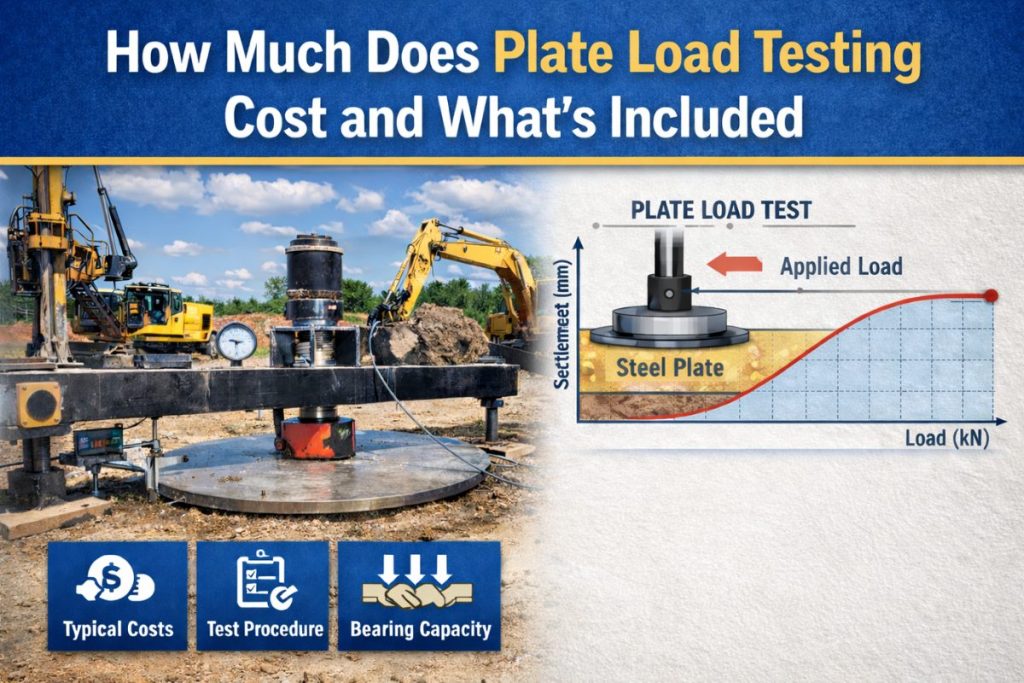
If you’re planning some construction, or perhaps a refurb or change of use, you’re going to want some confidence in what’s beneath your feet. Plate load testing gives you the real story on bearing capacity and load-bearing performance – no just relying on theoretical calculations, which can ultimately be a bit dodgy. By testing how the soil behaves under controlled load, you can make informed decisions about your foundations, working platforms, or where you can safely park that heavy plant. Loads of projects get in early and get support from plate load testing to reduce the uncertainty and make sure the ground can safely take the weight of everything you’re planning to put on it.
Typical costs for plate load testing
Plate load testing prices vary, of course, depending on site conditions, how many test points you need, and the complexity of the load required. The number of test locations, whether it’s easy to get to, and what the ground is like are all factors that’ll influence the final price. Despite there not being any widely published UK industry averages, the cost generally reflects the time, expertise, and kit required to get you the results you need.
Example pricing from a UK provider
For example, Plate Load Test offers prices starting from £275 for a half-day, and £500 for a full-day. Keep in mind that these are just rough guidelines, as each project is different – like the size of the plate, the load you need to test, and how many locations you want to test.
Test services & plate load test services
Plate load test services are a special kind of test that help you evaluate the ground’s performance under load. These are often used before installing heavy machinery, building foundations, or validating working platforms – basically any situation where you want to know if the ground can take the weight. Getting a professional service means the test will be done properly, with all the right kit, care and attention paid to instrumentation, controlled loading and careful measurement of settlement – all of which will give you reliable results that you can trust to inform your engineering decisions.
What affects the price
Number of test locations
The more test locations you need, the longer it’ll take and the more it’ll cost. If you just need to do one, it might be a half day job, but if you’ve got multiple locations or a big site, it could take a full day or even longer. Each additional location needs to be carefully set up, with all the necessary equipment and measurement – all of which adds to the time and the cost.
Required test load and equipment
If you need to test for a heavier load, or use reaction loads of some sort, then that’s going to require some more complex equipment and setup. If you’re planning to use cranes, or piling rigs, or other heavy equipment, then you’ll need to load the test up to simulate those conditions. That’s going to take longer and need more precise monitoring of settlement, which means it’s going to cost more.
Site access & ground conditions
Easy access to a flat site is a breeze, but if you’re not so lucky then it can be a bit more of a challenge. Confined areas, uneven ground, rocks, or anything else that might make it difficult to get the equipment in place is going to add to the time and cost. You might even need to use a smaller plate or some other special kit.
Programme constraints
If you can plan ahead and get the testing done in a nice orderly fashion then it’s likely to be more efficient, but if you have to do it on an urgent basis, or out of sequence, then it’s going to throw a spanner in the works. Getting all the kit, staff, and site access sorted out well in advance helps keep things on track and on budget.
Plate load test & plate bearing test explained
A plate load test (or plate bearing test) is a way of testing the bearing capacity of soil by applying a load to a steel plate and measuring how much it settles. This test is all about figuring out how well the ground will behave under the weight you’re planning to apply. Unlike just doing theoretical calculations, or just relying on CBR tests, this gives you a real-world view of how the ground will perform under operational conditions.
Plate load test procedure
Test apparatus & setup
The test kit typically includes a big round steel plate (the test plate), a load cell and some instrumentation to measure settlement. The plate size, width, and dimensions will depend on the site conditions and the requirements of the test. The plate is placed on a prepared ground surface, and the area of the steel plate is recorded so you can accurately calculate the pressure on the soil.
How the load is applied
Load is applied to the plate in stages, following a structured plate load test procedure. Each stage increases the load a bit more, so you can see how the settlement changes as the load goes up. The point at which the settlement becomes too much is carefully noted, and the testing continues until you reach the maximum load or ultimate load. This gives you a clear picture of the ultimate bearing capacity of the soil, and helps you work out the safe bearing capacity with a good factor of safety.
When the test is carried out
Plate load tests are used when assessing the soil for foundations, slabs or working platforms, especially if you’re going to be using a lot of heavy equipment. The test is also handy for sites with tricky ground conditions, shallow pits or big particles in the soil – all the things that make engineering design a bit trickier.
Bearing capacity & working platform assessment
Bearing capacity of the ground Plate Load Testing: Calculating Real Strength of Soil
Plate Load Testing lets engineers get a grip on a soil’s ultimate bearing capacity and its safe bearing capacity, all by applying a factor of safety to the numbers. This simple test gives a rock solid insight into a soil’s real strength – one that’s so accurate, it stops engineers from over designing or throwing money into unnecessary piling. Getting to know the bearing capacity of the ground is pretty much a no-brainer when building foundations, or setting up working platforms.
Making it work for working platforms
When it comes to working platforms, plate load testing tells you that your ground can safely handle cranes, piling rigs and any other construction equipment you might need. The results ensure the loads are put on the ground safely, and that any settlement under a given load stays within the limits you’re happy with – all of which helps protect both your structures and your machinery.
Getting the most from the results
When it comes to interpreting the results of a plate load test, the job is to see just how a soil responds as you increase the load on it. Engineers will be looking at – amongst other things – the total load value required, the settlement that occurs under a given load, and the load needed to get some settlement going in the first place. All of this information will help you figure out whether the soil can handle the job you’re asking it to do – and if not, what you need to do to make it work.
Plate Load Testing vs CBR Test: How do they compare
Plate load testing is all about seeing how a soil behaves when you actually load it, whereas a CBR test is all about measuring the actual strength of the soil in a lab. More often than not, both tests are used together in the same project to get a clear understanding of what your ground is like. Plate load test results can even be used to calculate an equivalent CBR value – which comes in handy for things like pavement design.
Following the rules
All plate load testing is done to a set of standards – BS 1377 and all the various bits that go with it. These standards ensure that you get consistent and reliable results – which of course gives everyone from designers to contractors and regulatory bodies a bit more confidence in your work.
Why Plate Load Testing matters
Plate load testing does what other tests can only dream of – it gives you a real life view of the physical properties of your ground, including its actual strength and the way it settles under load. By doing this, it reduces uncertainty, saves you money on piling, and helps guarantee that your foundations and working platforms do the job they were meant to do. That’s why it’s so popular in civil engineering and geotechnical projects.
Planning your budget: some tips
Get your loads sorted
Know your load requirements – including how much your total load will be, how much of that is going on to the plate, and what you might need later on. Getting all this clear will mean you can do the test planning bit with confidence.
Give engineers the facts
Sharing what you know about your site – including the condition of the ground and what equipment you’ll be bringing in – helps you pick the right plate size and test load. It means the results you get back will be spot on for your project.
Leave some room in your schedule
Planning ahead will help you avoid delays and make sure the results are available when you need them. And if you do it right, you’ll also be able to keep an eye on your costs
Make sure everyone is on the same page
Talking things through in advance stops any misunderstandings later on – so make sure you know exactly what the test is meant to find out and what the results will be used for. This helps everyone stay on track.
Is Plate Load Testing worth the investment
For projects where the ground performance really matters, plate load testing is more than just a good idea – it’s a top solution. It provides rock solid results that will help you design with confidence and work out exactly how much load the soil can take. By spending a bit on a plate load test, you can be sure your project will not only do what it’s meant to, but also save you money in the long run.