What to Look for in a CBR Test Service Provider: Understanding California Bearing Ratio, Soil Testing, and Road Construction
Why CBR Testing Quality Matters in Road Construction Projects
When it comes to road construction, pavement design or any other large-scale construction project, the quality of the ground beneath the structure is just as important as the materials you lay on top. That’s why the California bearing ratio test has become one of the most trusted tools in the civil engineering trade.
The CBR test, or California Bearing Ratio test, is a benchmark method used to work out how well a soil can take a load. It was first developed by the California State Highway Department (also referred to as the California Division of Highways) in the late 1920s, and it’s still a benchmark for testing soil to this day.
But here’s the thing: not all testing providers deliver the same quality.
Having a bad testing partner can lead to all sorts of problems, like inaccurate test results, picking the wrong materials, weak subgrade preparation, and project failures that cost a fortune to put right. So, choosing the right provider isn’t just about finding a company that does the job. It’s a critical project decision with financial repercussions if you get it wrong.
But what should you look for in a CBR test service provider? Let’s break it down.
California Bearing Ratio: Expertise in the Test Procedure
You need a provider who actually understands the CBR test procedure.
The CBR works by measuring how well a prepared soil sample can resist penetration with a standard plunger against a standard crushed rock material. The pressure needed to push the plunger into the soil is then expressed as a percentage of the force needed to drive the same plunger into the crushed-rock standard.
That percentage is what gives you the CBR value. Simple enough, you might think, but in reality, precision is key.
That means the testing process has to be under tight control when it comes to:
-
Moisture content
-
Compaction levels
-
Particle size
-
Soil density
-
Loading rate
-
Calibration of penetration equipment
An experienced provider knows that even a tiny inaccuracy in the test procedure can skew the CBR test results.
They should be able to explain exactly how they calculate the CBR value and whether their test is carried out to recognised industry standards.
CBR Test: Laboratory and In-Situ Test Capability
A good provider should be able to offer you both laboratory CBR and in-situ CBR test options.
Why are different CBR tests needed? Because every project is different.
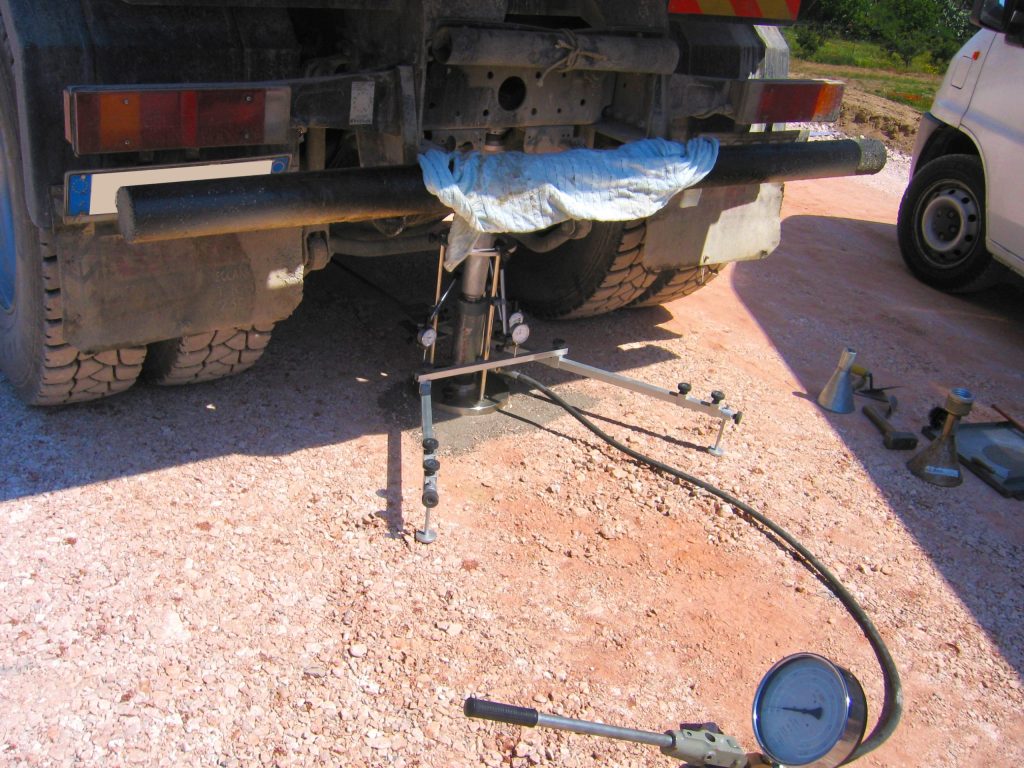
A laboratory test is done under controlled conditions using a compacted soil sample, while an in-situ test is done in the same location where the work will be happening.
If your project needs to see how real-world conditions will affect things, you might need an in-situ CBR test. For design-stage analysis, a lab CBR is often the way to go.
The provider should be able to help you figure out:
-
Which test is right for your project
-
Whether a field test will be good enough
-
If equivalent CBR values are needed
-
When supplementary methods like the DCP test might be the way to go
A capable testing company knows when the CBR test might need to be backed up with a different method to get an accurate CBR value. That’s the kind of technical judgement you want from a testing company.
Example Video of a CBR Testing Service Provider
Below is a short video by a CBR test service provider introducing their services, process, and the types of construction projects they support.
CBR Value: Clear Interpretation of Test Results
You need more than just numbers. You need to know what they mean for construction projects.
A quality service provider should be able to explain exactly what your CBR test results mean for construction projects. For example, the CBR value is usually interpreted like this:
-
Low values mean the soil isn’t that strong
-
Moderate values suggest acceptable support
-
Higher CBR values indicate stronger soil
-
A higher CBR value means better load support
-
Higher CBR ratings mean you can get away with less pavement thickness
This matters because CBR values help engineers decide how many layers of pavement to do.
A provider should be able to explain to you how the test values affect:
-
Pavement design
-
Bearing capacity
-
Drainage planning
-
Compaction requirements
-
Long-term performance
They should also be able to give you usable data from the CBR test, not just charts and numbers.
Bearing Test vs CBR: Do They Offer Plate Bearing Test Options?
Now this is where many clients get confused. There’s a lot of debate around bearing test vs CBR.
While the CBR test is used to look at soil strength through penetration test methods, the plate bearing test is all about looking at how a soil will settle under a rigid plate.
The plate bearing test, also known as the plate load test, is really useful when you’re looking at:
-
How well a foundation is being supported
-
How soil starts to settle
-
How a structure handles weight
-
How a surface layer will actually perform
If a company offers both Plate Bearing and CBR testing, that shows they’re a more versatile provider.
And if they can tell you the difference between the plate bearing test and the California bearing ratio test, then you’re probably dealing with people who know what they’re talking about.
Soil Testing Methods and Material Selection
Not all soil types behave the same. Some types will let the plunger sink right in, while others are more resistant.
That’s why the provider needs to take a close look at:
-
Particle size and composition
-
How dense the soil is
-
How much moisture is in it
-
The state the subgrade is in
The most reliable providers use a range of test methods to figure out how much weight a soil can take. They understand that the California Bearing Ratio test was developed for road and pavement building, but they also know when to use other methods.
For instance, some projects might need:
-
A plate load test
-
A DCP test
-
Density testing
-
Moisture analysis
Using different methods helps make better choices on materials, which, in the end, will save you money.
Understanding CBR Reporting and Practical Recommendations
A good provider will help you understand what the numbers on CBR reports actually mean in real terms.
Their report should clearly explain things like:
-
How they actually worked out the CBR value
-
Whether the sample actually met the standard CBR requirements
-
How far the plunger was required to penetrate
-
The pressure it took to get the plunger that far
-
What the results are actually saying about soil strength and capacity
They should also explain if the force needed to penetrate the soil matches what you need for your construction project.
Great providers make connections between numbers and what you actually need to do. For example, they might say: “If the CBR value is coming up short, then we might well need to look at stabilising the soil”. That awareness is what makes a real difference.
Road Construction: Experience in Civil Engineering Projects
Finally, look for some proper experience under their belt.
Testing for a small access road is very different from working on a major highway project.
The provider should have several years of experience in:
-
Road construction projects
-
Big construction projects with heavy civil engineering
-
Commercial infrastructure
-
Municipal works
-
Heavy-duty pavement systems
Ask them about previous test sites they’ve worked on. Have they worked on anything similar to your project?
Do they understand the importance of getting CBR test results spot on for construction projects?
If the answer is yes, that’s a good sign.
Final Thoughts on Choosing a CBR Test Provider
The California bearing ratio test is still one of the key tools used to determine soil strength and bearing capacity for modern engineering projects.
Its origins with the California State Highway Department only add to its importance in the world of civil engineering.
But the test only really works if the team doing it actually knows what they’re doing.
So the right provider should be able to:
-
Get the CBR test procedure just right
-
Give you reliable test results
-
Do both lab test and on-site test if that is what is needed
-
Have expertise in the plate bearing test too
-
Give you clear reports that make sense
-
Have years of experience in civil engineering
When it comes to construction, there’s no room for taking wild guesses.
Getting the testing right means building roads that will last, and that starts with picking the right CBR testing service provider.